
Thoughts on Andy Shauf's Norm

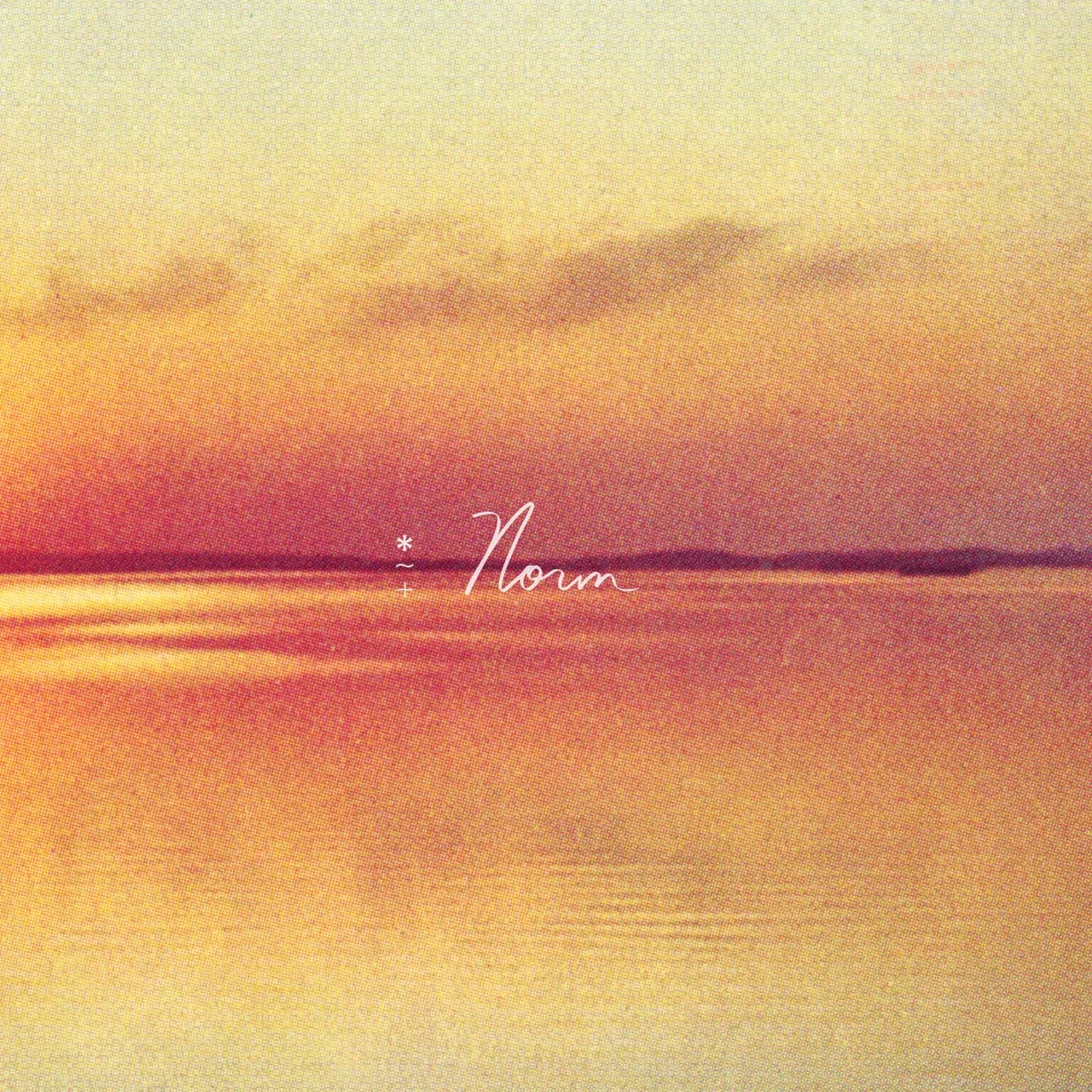
Andy Shauf’s last several full-length albums (The Party, The Neon Skyline, and Wilds) are projects fundamentally about—and that take as their setting—the social sphere. They are about impression-making and impression-reading, about people letting loose under the influence of various social lubricants, coming together and being driven apart.
In contrast, his new record, Norm, (re)calls to consciousness, for me, some of the deepest isolation of 2020 when many people reckoned with the real possibility of the death of social life. This was especially acutely sensed if one happened to be living alone when the pandemic hit. Those living alone were the literal remainder to every public health calculation issued as a directive asking people to determine their “bubbles” and safe spheres of (inter)action that consistently took as a given the couple formation and the nuclear family unit as starting points.
Norm is an album about distance, alienation, voyeurism, projection, obsession, and fantasy, amongst other things. If we were glib and feeling deeply uncharitable, we might also call it Shauf’s “incel album,” but it hints at a deeper truth than that phrasing allows: an affective truth about atomized life in late-capitalist societies in the Global North where we have somehow pushed past Thatcher’s pronouncement that “there's no such thing as society” to a brave new reality of increasingly precaritized labour and transactional relation, of instant access to almost anything and everyone imaginable via the internet but very little actual connection or meaning. (Shauf, himself, is keenly aware of the fundamental emptiness of these interactions, as comes through in his own recent comments about social media on this album cycle.)
Across Norm’s taut 36 minutes, Shauf’s writing is frequently operating on two levels simultaneously. On the first level, there are the gorgeously sparse sonics which he has crafted by expanding his palette into synthesizer textures, and light jazz embellishments favouring the piano. Then, on the second level, there is the lyric writing, which evinces his more recent engagement with masters of minimalist short fiction like Raymond Carver and Lydia Davis. If the linear narrative progression of The Neon Skyline’s night-long song cycle could perhaps, at times, feel like it was holding the listener’s hand, Norm leaves far more open to interpretation, as if the record’s true action is happening in and around the edges of its songs.
“Telephone” perfectly illustrates the way that the two types of (interrelated) writing interact on the LP. Give it an inattentive—dare I say passive—listen, and its dreamy sonics and gentle vocal leave one with the impression that it is another entry in a long line of love songs about the telephone, its speaker pining away on the line for a love object brought close by the wonder of technology but still impassably distant. On second or third listen, however, and perhaps with the lyric sheet in hand, the song’s second verse reveals the song to be more troubling: “I used to call you on the telephone / I couldn't catch my breath / To expel a single word / You would hang up your telephone / You always looked confused / Then you'd turn and close the blinds.” Something more sinister appears to be going on here, and “Telephone” arrives only a quarter of the way into this record.
Other moments on Norm make me think of Pat Flegel’s work as Cindy Lee, where traditional torch song lyrics are sung in such a way—and encircled by the bounds of Flegel’s art pop project—as to expose the noxiously toxic codependency that structures most of American popular romantic song forms, and also possibly the brains of generations of people that credulously consume them during the most formative times of the human life course(?). So, on Norm’s “Paradise Cinema,” Shauf’s narrator peppers every refrain with a swooning “Ready or not / You are his number one,” which, were it not popping up in a song about someone stalking a person at a matinee movie, might seem a bit more romantic, or, at least, assure a Gen Z listener to a(n imagined) 19-second TikTok earworm containing something equivalent to this sentiment that they’re not a “side piece.” Similarly, on Norm’s darkest track, the orchestral pop stunner “Sunset,” the album’s titular character expresses, “Oh my / Never want to leave your side / This isn’t the end” while abducting the love object and “leaving the city” to do only God—who, coincidentally, happens to be another one of Norm’s narrators—knows what to them. How are we to respond to what could pass as boilerplate mid/late-twentieth-century romantic pop song lyrics being deployed in such grisly contexts?
Shauf has said that Norm is a meditation on love:
Love in general is a really fascinating concept. It’s something almost everyone gets wrong for their whole lives. It’s taught wrong. You have so many religions that are based on love and this concept of God’s perfect love, but I don’t think we can even comprehend that as people who can’t seem to make that work for ourselves. There’s all sorts of love songs. But I think I wanted to make love songs that were disconnected from romanticizing love. If there’s a reality to it, it’s that we’re always getting it wrong. Almost always. I’m sure some people are getting it right. [Laughs]
The key piece of that rich quote, to me, is Shauf’s claim that he “wanted to make love songs that were disconnected from romanticizing love.” We could say that Norm is an album of love songs, but about love as pathological obsession, dangerous misapprehension, violent fantasy. Interestingly, in order to craft these kinds of love songs, Shauf chose to speak in the language of the traditional romantic pop song, deploying it to devastating effect at key moments in this powerful song cycle.
Love this!